
Using compost on new and established lawns
6 min read
Most lawn problems are soil problems. Thin turf, moss, dry patches and slow recovery usually trace back to compacted, lifeless ground rather than the grass itself. Compost is the cheapest and most effective tool for fixing that, whether you are starting a new lawn from scratch or improving one that has been down for years.
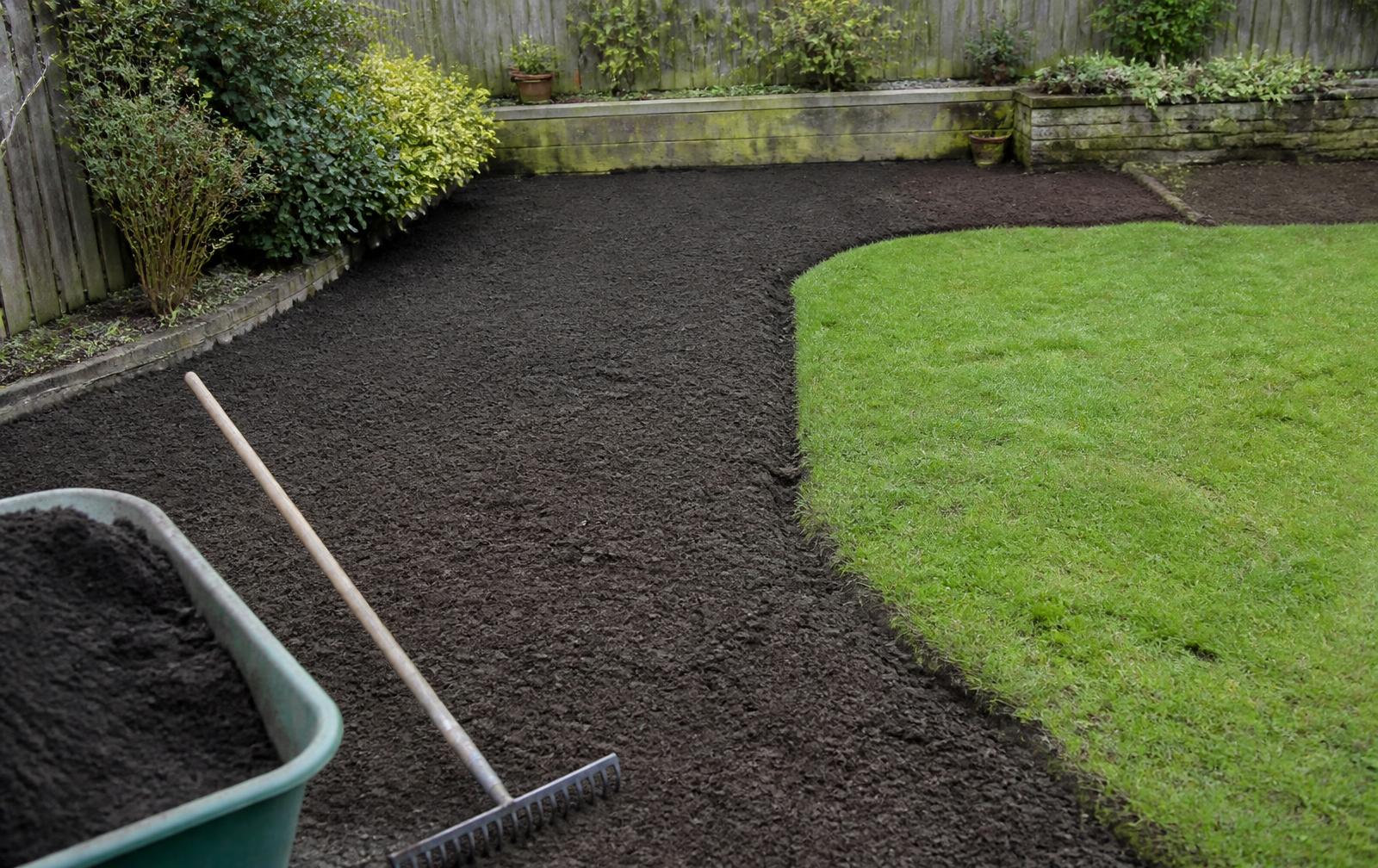
New lawns, compost instead of imported topsoil
The default advice for a new lawn is to import topsoil. It is expensive, heavy to move, of very variable quality, and often arrives full of weed seed. In most gardens you already have soil, what it lacks is organic matter and structure.
Rotovating a good compost into the existing ground is usually far cheaper than buying in topsoil by the load, and it produces a better rooting medium because you end up with a deep, blended profile rather than a shallow layer sitting on compacted subsoil. That interface between imported soil and untouched ground is a common cause of drainage problems and shallow rooting.
- Spread 50mm to 100mm of compost over the area
- Rotovate to 150mm to 200mm so compost and soil are properly blended
- Rake, firm by treading or rolling, then rake again to a fine tilth
- Let the surface settle and remove any weeds that appear before seeding or turfing
- Seed or lay turf, then keep the surface consistently moist during establishment
A rough cost comparison
For a typical domestic lawn, importing enough screened topsoil to make a meaningful depth runs into several loads. Achieving the same improvement by incorporating loose tipped compost into the ground you already have generally costs a fraction of that, with less spoil to remove and less labour spent barrowing material around. Ask us with your dimensions and we will work out honest quantities either way.
Established lawns, top dressing
For a lawn already down, top dressing with compost is the routine that quietly transforms it. Applied thinly and regularly, it levels minor hollows, feeds soil biology, improves moisture holding and encourages the grass to thicken from the base.
- Mow shorter than usual and remove clippings
- Scarify to pull out thatch and moss, aerate if the ground is compacted
- Spread 5mm to 10mm of compost across the surface, no more
- Brush or drag it in with a stiff broom or lute so blades are not smothered
- Overseed at the same time if the sward is thin, then water in
When to do it
Early autumn is ideal, warm soil and reliable moisture give fast recovery and few weeds competing. Mid spring is the second window, once growth is properly underway. Avoid top dressing in drought or when the ground is waterlogged or frozen.
Repeat annually. A lawn top dressed every year for three years is a noticeably different lawn, denser, greener for longer in dry spells, and far less prone to moss.
A note on quantities
As a guide, top dressing at 5mm needs roughly 5 litres of compost per square metre, so 100 square metres takes about 500 litres. New lawn preparation at 50mm needs roughly 50 litres per square metre. Loose tipped loads are the practical choice for anything beyond a small garden. Send us your measurements and we will recommend the most sensible format.
Not sure what you need?
Send us your measurements and we will recommend the most practical format and honest quantities.
More from the journal
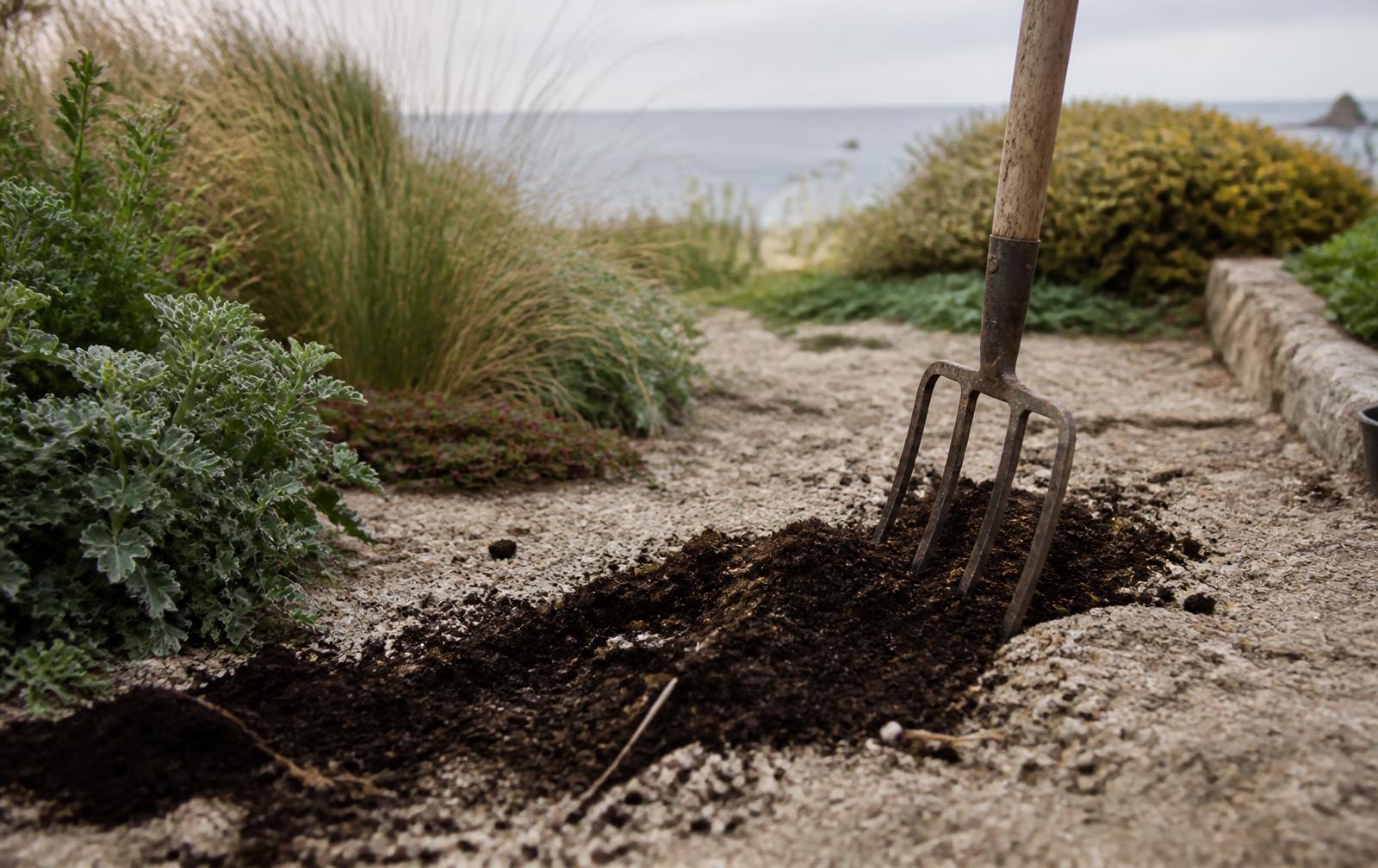
How to improve sandy coastal soil
Why free-draining coastal ground struggles to hold water and nutrients, and what to add, when.
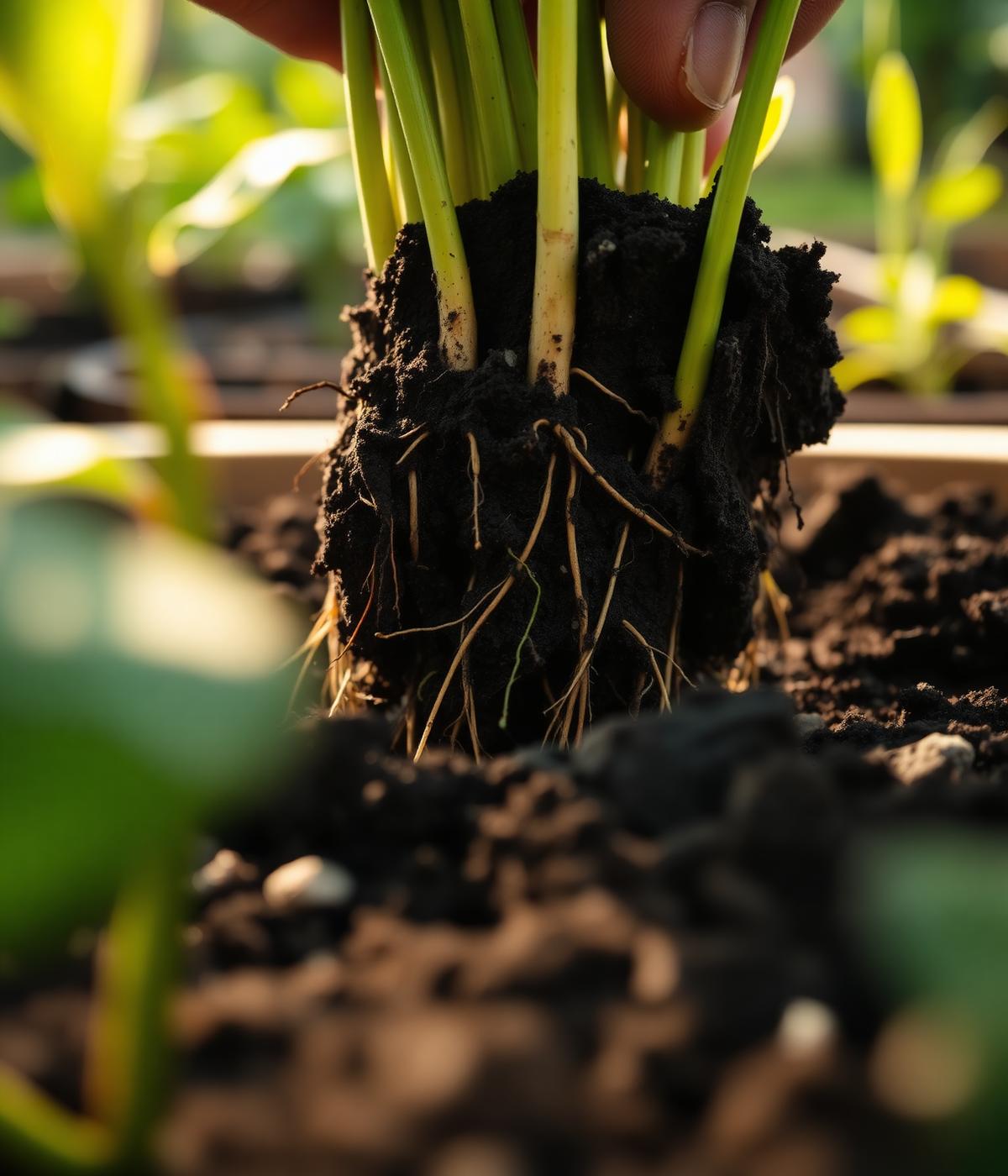
Feeding plants with kelp: a sensible guide
Dilution rates, timing and what kelp biostimulants realistically do for roots and resilience.

Why we use farmed kelp
How responsibly farmed kelp differs from wild gathering, and what it adds to Coastal Compost and the Kelp Range.